
Resistência das(os) Metroviárias(os) integra Dia Nacional de Mobilização por direitos
20.03.26 Destaques, NotíciasNesta sexta, 20 de março, metroviários e metroviárias de todo o Brasil estão mobilizados ✊ em um grande Dia Nacional de Luta que unifica as pautas da categoria e reforça o compromisso com a transformação social, com destaque para a luta pelo fim da escala 6×1, pela redução da jornada sem redução salarial e pela realização de concursos públicos já e o combate irrestrito à violência contra a mulher.
Rio Grande do Sul
The Cultural History of Sports Betting in Britain via Betzoid
Few cultural practices are as deeply woven into the British national identity as sports betting. From the muddy racecourses of Tudor England to the sleek digital platforms of the twenty-first century, wagering on sporting outcomes has shaped social customs, influenced legislation, and reflected the broader values of British society across centuries. Understanding this history is not merely an exercise in nostalgia — it illuminates how a nation’s relationship with risk, recreation, and regulation has evolved in response to economic pressures, moral debates, and technological transformation. Britain’s betting culture is, in many respects, a mirror held up to the country itself.
Ancient Roots and the Rise of Horse Racing Culture
The origins of sports betting in Britain stretch back well before the establishment of formal institutions or legal frameworks. Archaeological and historical evidence suggests that informal wagering accompanied athletic contests in Roman Britain, where soldiers and civilians alike placed bets on gladiatorial events and chariot races. However, it was during the medieval period that betting began to take on a distinctly British character, particularly through the culture of animal contests — cockfighting, bear-baiting, and early forms of foot racing attracted wagers among all social classes, from peasants to noblemen.
Horse racing emerged as the dominant vehicle for organised betting during the Stuart era. King James I established the royal racing stables at Newmarket in the early seventeenth century, and his successor Charles II was so passionate about the sport that he earned the nickname “Old Rowley” after his favourite stallion. Newmarket became the spiritual home of British racing, and with it came a culture of gentlemanly wagering that formalised the practice among the aristocracy. These early bets were largely private arrangements between wealthy individuals, sealed with a handshake and recorded in leather-bound books at establishments like White’s Club in London, founded in 1693.
The eighteenth century brought significant structural changes. The Jockey Club, formed around 1750, began imposing rules on horse racing and, by extension, on the betting that surrounded it. This was a pivotal moment: for the first time, an organised body sought to govern not just the sport but the integrity of the market around it. Tattersalls, the famous bloodstock auctioneers founded in 1766, established a committee that settled betting disputes among members, effectively creating one of Britain’s earliest quasi-judicial bodies dedicated to gambling matters. The culture of betting was becoming institutionalised, respectable, and commercially significant.
Throughout this period, betting shops — or “list houses” as they were sometimes called — began appearing in urban centres, catering to working-class punters who could not afford entry to the racecourse. These establishments were frequently targeted by authorities, as the moral and social anxiety around gambling among the lower classes was considerably greater than that directed at aristocratic wagering. This class-based double standard would persist for well over a century and fundamentally shape the legislative approach to betting in Britain.
Legislation, Prohibition, and the Long Road to Legalisation
The nineteenth century was defined by an intense moral debate about gambling’s place in British society. The Victorian era, with its emphasis on self-improvement, sobriety, and industriousness, was deeply suspicious of betting, particularly as it affected the working poor. A series of legislative acts reflected this anxiety. The Betting Houses Act of 1853 effectively criminalised off-course cash betting establishments, forcing working-class bettors underground while leaving the wealthy free to wager by credit at their clubs and on the racecourse itself. The hypocrisy was widely noted but rarely addressed.
Despite prohibition, illegal street betting flourished throughout the late nineteenth and early twentieth centuries. Bookmakers operated through networks of runners and lookouts, conducting business in back alleys, pubs, and factory gates. The police, often sympathetic to local communities, enforced the law inconsistently. For millions of working-class Britons, the weekly flutter on the horses was a legitimate form of leisure and social bonding, regardless of its legal status. The gap between law and social reality had never been wider.
The Street Betting Act of 1906 tightened restrictions further, yet still failed to suppress the practice. By the mid-twentieth century, it was estimated that millions of illegal transactions took place every week across Britain. The absurdity of the situation was becoming impossible to ignore. The government commissioned the Willink Royal Commission on Betting, Lotteries and Gaming, which reported in 1951 and laid the intellectual groundwork for reform. A decade later, the Betting and Gaming Act of 1960 — one of the most significant pieces of social legislation in modern British history — legalised cash betting shops for the first time. On 1 May 1961, licensed betting offices opened their doors legally across the country, and within a year, over 10,000 had been established.
The newly legalised betting shops were, however, deliberately austere. Regulators, still wary of encouraging excessive gambling, prohibited comfortable seating, the serving of refreshments, and the display of live race broadcasts. The intention was to allow betting without making it pleasurable — a compromise that satisfied neither reformers nor the industry. These restrictions were gradually relaxed over subsequent decades, and by the 1980s and 1990s, betting shops had transformed into far more welcoming environments, complete with televised racing, comfortable interiors, and a broader range of markets.
The Digital Revolution and the Transformation of British Betting
The arrival of the internet in the mid-1990s initiated the most dramatic transformation in British betting history. Online platforms dismantled the geographical and temporal boundaries that had always defined the industry. For the first time, a punter in rural Scotland could place a bet on an Australian horse race at three in the morning without leaving home. The market expanded exponentially, and new forms of wagering — in-play betting, exchange betting, and spread betting — fundamentally altered the relationship between bookmaker and customer.
Betfair, launched in 2000, was perhaps the most disruptive innovation of the era. By creating a peer-to-peer betting exchange, it allowed customers to both back and lay outcomes, effectively enabling anyone to act as a bookmaker. This democratised the market in ways that the Jockey Club’s founders could never have imagined. Traditional bookmakers were forced to adapt, diversify, and innovate to remain competitive. The consolidation that followed produced several multinational giants, though the landscape also became fertile ground for specialist and comparison platforms. Resources like https://betzoid.com/ emerged as valuable tools for British bettors navigating this increasingly complex marketplace, offering structured analysis of odds, operators, and betting strategies that help consumers make more informed decisions.
The Gambling Act of 2005 represented the legislative response to this new environment. It created the Gambling Commission as an independent regulatory body, established a licensing regime for online operators, and introduced the principle that gambling should be conducted fairly and openly. However, the Act was drafted before the full implications of smartphone technology were understood, and by the 2010s, critics were arguing that it was no longer fit for purpose. The proliferation of mobile betting apps meant that gambling was now available at any moment, in any location, presenting challenges around problem gambling, advertising standards, and the protection of vulnerable individuals that regulators have continued to wrestle with.
Football’s growing commercial dominance over British sporting culture during this period also reshaped the betting landscape significantly. While horse racing had been the traditional heartland of British betting, football gradually became the primary focus of wagering activity. The Premier League’s global reach, combined with the expansion of in-play markets and accumulator betting, made football betting a mass-participation activity. Shirt sponsorships, stadium advertising, and television commercials created an almost seamless integration between professional football and the gambling industry — a relationship that has attracted increasing scrutiny and calls for reform in recent years.
Cultural Identity, Social Impact, and the Future of British Betting
To understand British betting culture is to understand something essential about British attitudes toward class, leisure, and the state. The persistence of informal betting through centuries of prohibition reveals a society that has consistently placed personal freedom and community custom above legislative authority in matters of private recreation. The eventual legalisation of betting shops in 1961 was not a moral capitulation but a pragmatic recognition of social reality — an acknowledgement that the law must, to some degree, reflect the lived experience of the people it governs.
The cultural significance of betting in Britain extends beyond mere economics. The Grand National, held annually at Aintree since 1839, attracts millions of casual bettors who place a wager just once a year, treating the event as a social ritual rather than a serious gambling activity. The Royal Ascot meeting remains a fixture of the British social calendar, blending fashion, tradition, and wagering in a uniquely British combination. These events demonstrate that betting, at its most culturally embedded, functions as a form of collective participation — a way of engaging with sporting spectacle that adds personal stakes to communal experience.
Betzoid and similar analytical platforms reflect a broader cultural shift in how British bettors approach wagering in the modern era. Where previous generations relied on tipsters, racing newspapers, and word of mouth, contemporary bettors increasingly seek data-driven insights, comparative odds analysis, and responsible gambling resources. This transition from intuition to information represents a maturation of betting culture, though it also raises new questions about the commercialisation of what was once a largely informal social practice.
The ongoing review of gambling legislation in Britain — with proposals ranging from stricter advertising restrictions to mandatory affordability checks — suggests that the cultural negotiation around betting is far from settled. The challenge for policymakers is to balance the legitimate recreational interests of millions of responsible bettors against the very real harm experienced by a significant minority. How Britain resolves this tension will define the next chapter in a cultural history that spans more than five centuries.
Conclusion
Britain’s relationship with sports betting is one of the most revealing threads in its social and cultural fabric. From the aristocratic wagers of Newmarket to the algorithmic precision of modern online platforms, the practice has continuously adapted to reflect the values, technologies, and contradictions of its era. What remains constant is the fundamental human impulse that drives it: the desire to engage more deeply with sporting outcomes, to test one’s judgement, and to share in the collective drama of competition. As regulation evolves and technology advances, that impulse shows no sign of diminishing — and Britain’s betting culture will continue to evolve alongside it.
Neste contexto de mobilização nacional, o Sindimetrô RS realiza duas importantes atividades voltadas às mulheres metroviárias e às usuárias da Trensurb. A iniciativa, organizada pela Secretaria da Mulher do sindicato, também integra o calendário de enfrentamento à violência de gênero e ao feminicídio, reafirmando o compromisso da categoria com o combate ao machismo em todo o país.
A programação no Rio Grande do Sul começou às 7h, na Estação Mercado, com uma ação de diálogo com as usuárias. A atividade orientou sobre os canais de denúncia e reforçar a importância de denunciar todo e qualquer tipo de violência contra a mulher, ampliando a conscientização e fortalecendo a rede de apoio e proteção.

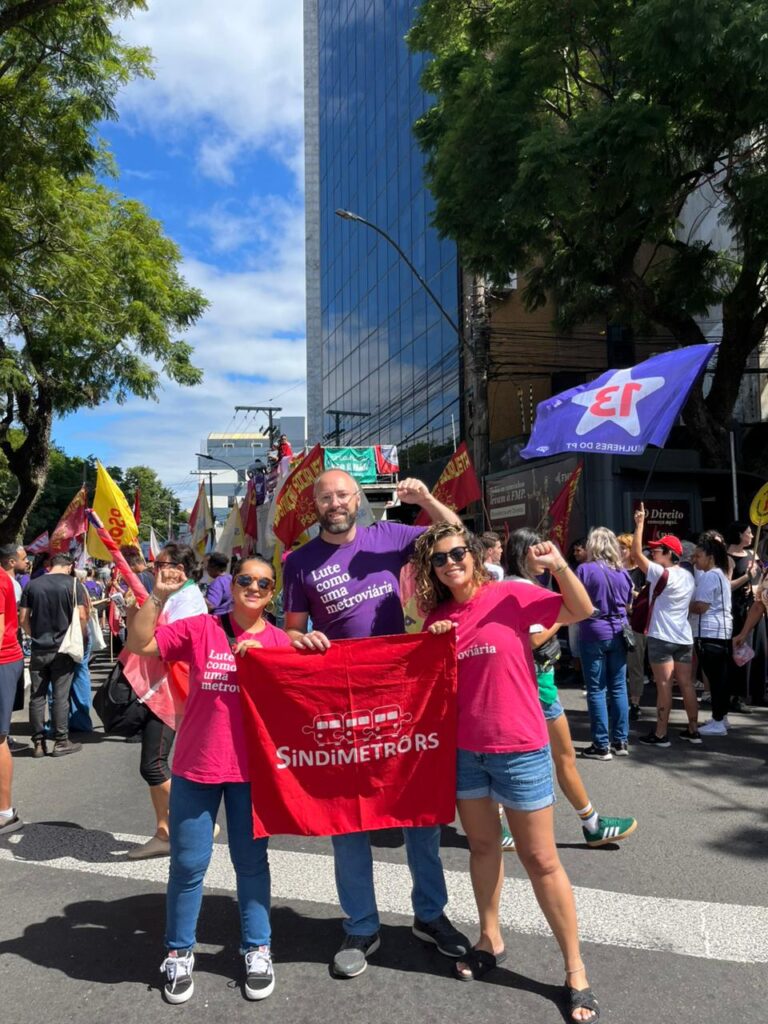






Já às 14h, no refeitório da Trensurb,foi realizado o Café das Metroviárias — um espaço exclusivo para as trabalhadoras. A atividade contou com a participação da advogada Luciane Toss, que conduzirá uma conversa sobre os direitos das mulheres e os desafios enfrentados no ambiente de trabalho e na sociedade.
A proposta de um espaço reservado às mulheres tem como objetivo garantir um ambiente seguro, acolhedor e de confiança, onde as metroviárias possam compartilhar experiências, refletir coletivamente e fortalecer a organização na luta contra a opressão de gênero e o assédio — seja dentro da empresa ou no cotidiano.
Mobilização também em São Paulo
Como parte do mesmo dia nacional de luta, metroviários e metroviárias de São Paulo também realizam ações de mobilização junto à população. A categoria promove a retirada do uniforme, com uso da camiseta do Sindicato, além da distribuição de Carta Aberta à população em dois pontos da cidade: às 6h, em Itaquera, e às 12h, no Anhangabaú.







As atividades reforçaram a unidade nacional da categoria metroferroviária na luta contra a violência de gênero, o assédio e todas as formas de opressão, dialogando diretamente com a população e ampliando a conscientização sobre o tema.
A participação de todas é fundamental para fortalecer essa construção coletiva e avançar na defesa de uma sociedade mais justa e livre de violência.